- Written by: ajworkteam60@gmail.com
- June 22, 2026
- Categories: Digital Product, Digital Agency
- Tags:
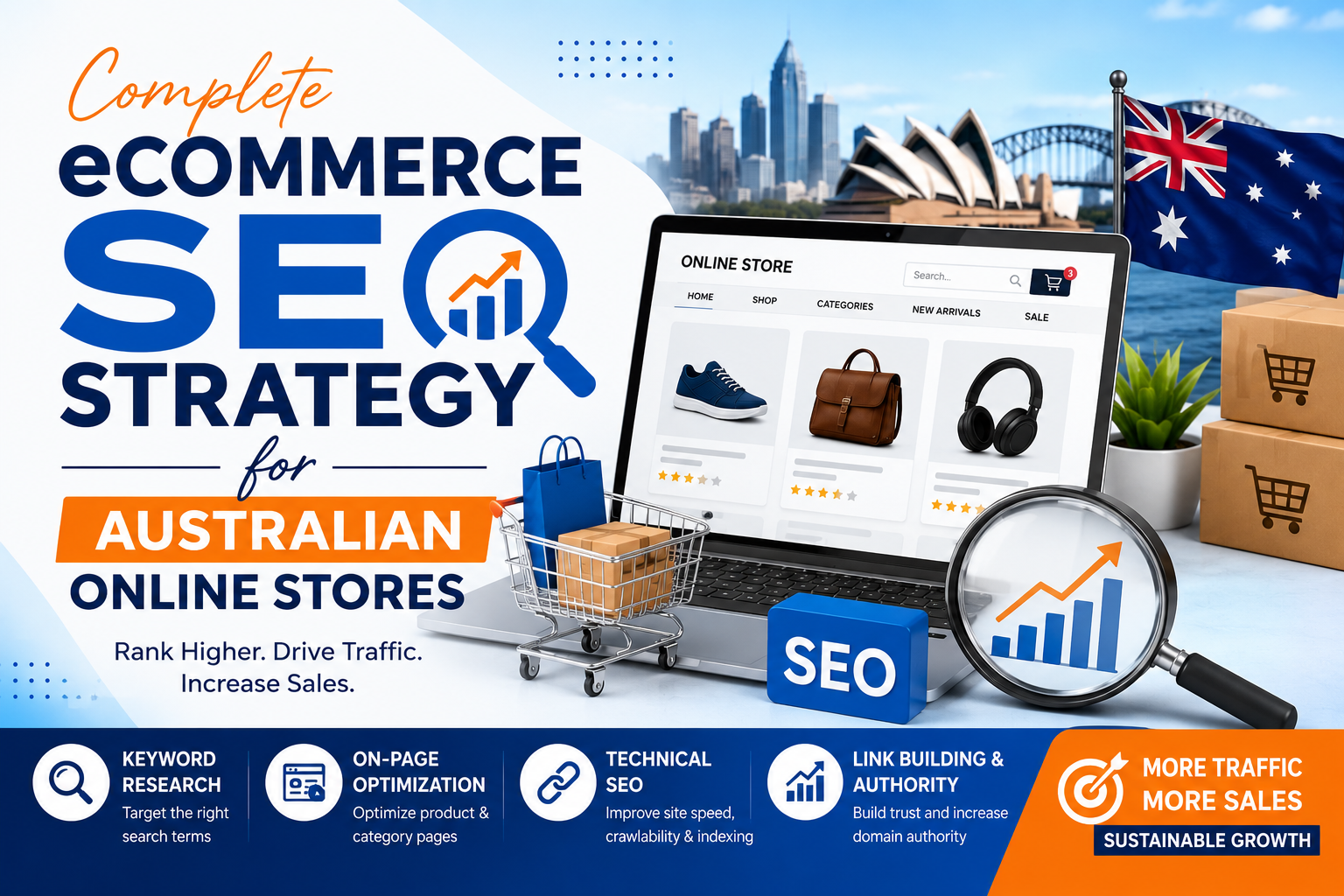
Complete eCommerce SEO Strategy for Australian Online Stores (2026 Guide)
The Australian eCommerce industry continues to grow rapidly, creating both opportunities and challenges for online retailers. As more businesses move online and competition increases, simply launching an online store is no longer enough. To attract qualified customers and generate sustainable revenue, your store needs a comprehensive eCommerce SEO strategy.
Whether you’re running a Shopify store, WooCommerce website, Magento platform, or a custom-built eCommerce solution, search engine optimization remains one of the most effective channels for acquiring long-term customers without relying solely on paid advertising.
At Aj Digital Leads, we help Australian eCommerce businesses improve visibility, attract high-intent buyers, and increase online sales through strategic SEO campaigns. This guide explains the exact framework used to build a successful eCommerce SEO strategy in 2026.
What is an eCommerce SEO Strategy?
An eCommerce SEO strategy is a structured plan designed to improve an online store’s visibility in search engines such as Google. The objective is to attract users who are actively searching for products, solutions, or information related to your industry. A successful eCommerce SEO strategy focuses on:- Product page optimization
- Category page optimization
- Keyword targeting
- Technical SEO
- Internal linking
- Content marketing
- Authority building
- Conversion optimization
- Running shoes
- Buy running shoes online Australia
- Best running shoes Australia
- Men’s running shoes Sydney
- Lightweight running shoes for marathon training
Why eCommerce SEO is Critical for Australian Online Stores
Australia’s eCommerce landscape is becoming increasingly competitive. Consumers now compare products across multiple platforms before making a purchase decision. Businesses compete against:- Amazon Australia
- eBay sellers
- Large retail chains
- Marketplace websites
- Independent Shopify stores
- Direct-to-consumer brands
Without SEO
Many online businesses experience:- Rising advertising costs
- Reduced profit margins
- Inconsistent traffic
- Limited brand visibility
- Dependency on paid channels
With SEO
Businesses benefit from:- Sustainable organic traffic
- Lower customer acquisition costs
- Increased brand authority
- Higher conversion rates
- Long-term revenue growth
The Five Core Pillars of a Successful eCommerce SEO Strategy
Every successful eCommerce SEO campaign is built on five fundamental pillars:1. Keyword Intelligence
Understanding what customers search for and why.2. Site Architecture
Creating a logical structure that users and search engines can easily navigate.3. On-Page Optimization
Improving product pages, category pages, and supporting content.4. Technical SEO
Ensuring your website is fast, secure, mobile-friendly, and crawlable.5. Authority Building
Developing trust and credibility through backlinks, content, and brand signals. These pillars work together to create long-term ranking growth.Step 1: Advanced Keyword Research and Buyer Intent Mapping
Keyword research remains the foundation of every successful SEO campaign. The biggest mistake online stores make is targeting keywords based solely on search volume. Instead, we prioritize search intent.Transactional Keywords
These are the highest-converting keywords because users are ready to purchase. Examples:- Buy gaming laptop Australia
- Best office chair Australia
- Coffee machine online Australia
Commercial Investigation Keywords
These users are researching before buying. Examples:- Best gaming laptop under $2000
- Top coffee machines Australia
- Product comparison reviews
Informational Keywords
These attract users at the beginning of the buying journey. Examples:- How to choose a coffee machine
- Benefits of ergonomic office chairs
- Laptop buying guide Australia
Step 2: Build a Strong eCommerce Site Architecture
Website structure plays a major role in SEO performance. Google needs to understand the relationship between your categories, products, and content. An ideal structure looks like this: Home → Category → Subcategory → Product Example: Home → Men’s Shoes → Running Shoes → Nike Air Zoom Pegasus This structure helps:- Improve crawl efficiency
- Strengthen topical relevance
- Distribute authority through internal links
- Enhance user experience
Step 3: Product Page SEO Optimization
Product pages are where conversions happen. Every product page should be optimized to rank and convert visitors into customers.Product Title Optimization
Include:- Product name
- Key feature
- Target keyword
Product Description Optimization
Avoid using manufacturer descriptions. Instead:- Write unique content
- Highlight benefits
- Address customer pain points
- Include semantic keywords naturally
Image Optimization
Optimize all product images by:- Compressing file sizes
- Using descriptive filenames
- Adding keyword-focused alt text
Product Schema Markup
Implement structured data for:- Price
- Reviews
- Ratings
- Availability
- Product information
Step 4: Category Page SEO
Category pages are often among the highest-performing pages on an eCommerce website. They target broader search terms with higher search volume. Example: Men’s Running Shoes Australia Instead of only listing products, category pages should include:- SEO content
- Keyword variations
- Internal links
- FAQ sections
- Buying guidance
Step 5: Technical SEO for eCommerce Websites
Technical SEO ensures your website can be efficiently crawled, indexed, and ranked.Improve Website Speed
Modern shoppers expect fast-loading websites. Best practices include:- Compress images
- Minify code
- Reduce third-party scripts
- Use a CDN
- Optimize hosting
Core Web Vitals
Google uses user experience metrics as ranking signals. Focus on:- Largest Contentful Paint (LCP)
- Interaction to Next Paint (INP)
- Cumulative Layout Shift (CLS)
Indexation Management
Avoid:- Duplicate product pages
- Thin content pages
- Parameter-generated duplicates
Step 6: Content Marketing for eCommerce SEO
Content marketing helps attract customers before they’re ready to buy. Educational content builds trust and topical authority. Examples include:- Product buying guides
- Industry trends
- Comparison articles
- Expert advice
- Product reviews
- Best Running Shoes in Australia for 2026
- Shopify vs WooCommerce SEO Comparison
- How to Choose the Right Office Chair
Step 7: Build Authority Through Backlinks
Backlinks remain one of Google’s strongest ranking signals. High-quality backlinks indicate trust and credibility. Effective strategies include:- Guest posting
- Digital PR
- Industry partnerships
- Resource page outreach
- Expert contributions
Step 8: Conversion Rate Optimization
Generating traffic is only half the battle. To maximize revenue, your store must convert visitors into customers. Optimization areas include:- Product page design
- Call-to-action placement
- Trust badges
- Customer reviews
- Mobile usability
- Checkout experience
Building E-E-A-T for eCommerce SEO
Google increasingly prioritizes Experience, Expertise, Authoritativeness, and Trustworthiness. To strengthen E-E-A-T:Experience
Share real-world product knowledge and customer experiences.Expertise
Publish expert-written content and detailed buying guides.Authoritativeness
Earn mentions and backlinks from reputable websites.Trustworthiness
Display:- Contact information
- Business details
- Secure checkout
- Customer reviews
- Privacy policies
Local SEO and GEO Optimization for Australia
If you sell products within Australia, GEO targeting is critical. Use location-specific keywords such as:- Online store Australia
- Sydney running shoes
- Melbourne office furniture
- Brisbane fitness equipment
- Local shipping
- Australian pricing
- Local customer needs
- Regional trends